

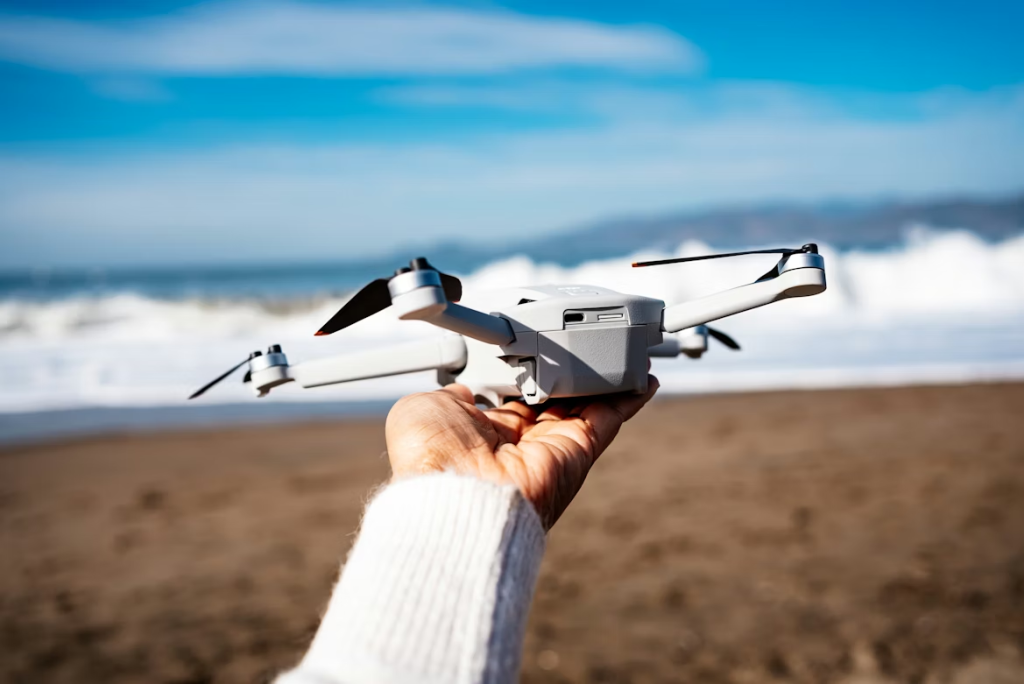
The sky is no longer the limit for the aviation industry in Australia. From mining surveyors in Western Australia to wedding photographers in Sydney, the commercial use of Unmanned Aerial Vehicles (UAVs) has taken off in popularity. Although it is easy to go out and buy a UAV, it is not so easy to legally fly it for commercial purposes.
If you want to turn your passion for flying into a lucrative business, then you need to look into commercial drone pilot licence programs. Although it may be complicated at first, it is an essential part of becoming a commercial UAV pilot. This article will outline what you need to know about commercial UAV pilot licences in Australia.
The Basics of the Commercial UAV Pilot Licence
The United States has the FAA Part 107, which allows UAV pilots to fly for commercial purposes, but in Australia, the gold standard for commercial UAV pilots is the Remote Pilot Licence, or RePL. With this commercial UAV pilot licence, you can fly UAVs for commercial purposes, which opens up the possibility of flying in conditions that are normally reserved for recreational UAV pilots.
The RePL allows you to fly commercial UAVs that are heavier than two kilograms, which is normally reserved for surveying or carrying expensive camera gear. Moreover, it is a requirement for individuals or businesses that want to apply for the Remote Operator’s Certificate, which is the business licence that you need to fly UAVs for commercial purposes. If you do not have an RePL, then you are severely handicapped in terms of where you can fly and what commercial work you can legally do.
Prerequisites for Joining a Program
Before you get the chance to sit in the pilot’s seat, there are a number of things you have to do. The first thing you need is an Aviation Reference Number (ARN) from CASA. This is a unique identifying number similar to a driver’s license number but in the aviation industry. This is free, and you do it online, but you have to do it if you want a pilot license in Australia.
In terms of requirements, you have to be at least 16 years old to qualify for a remote pilot license. You also have to have a standard level of language proficiency. This is important in the aviation industry, as you have to be able to understand various forms of communication, including charts and radio communications. You do not have to have prior experience, but good hand-eye coordination is a definite plus.
What to Expect from the Curriculum
As a commercial drone pilot, you expect a lot more than just learning how to use the controls. The theory part of the course is meant to impart knowledge in you that makes you a real aviator. You expect to spend a lot of time learning about aerodynamics so that you know how you keep the plane in the air. You expect to learn a lot about meteorology as well. Weather patterns, wind shear, and clouds are important in keeping your plane in the air.
The curriculum will also delve deeply into air legislation and the different classifications of airspace. It is necessary to learn to read aeronautical charts to identify controlled airspaces around airports where flying might be prohibited or require a special license to fly. The safe use of lithium batteries and human factors such as fatigue and stress management are included in the theory aspect of the curriculum.
Practical Training
Practical training is where the hands-on aspect of flying is conducted. The instructor will guide you through various flight manoeuvres such as takeoff, landing, hovering, and intricate figure eights to demonstrate your proficiency in flying a drone. More importantly, the practical aspect will include emergency procedures. This is where you will learn what to do in case your connection is lost, your drone suddenly loses battery, or the environment changes drastically.
Launching Your Career in Aviation
Your commercial drone pilot license is an investment in a future-proof skill set. The certification will give you a competitive advantage over others by proving to your clients and insurers that you are a competent professional who is knowledgeable about the laws of the air. Whether your aim is to inspect infrastructure, survey agricultural lands, or capture breathtaking aerial cinematography, the RePL is your key to a legal and lucrative career.