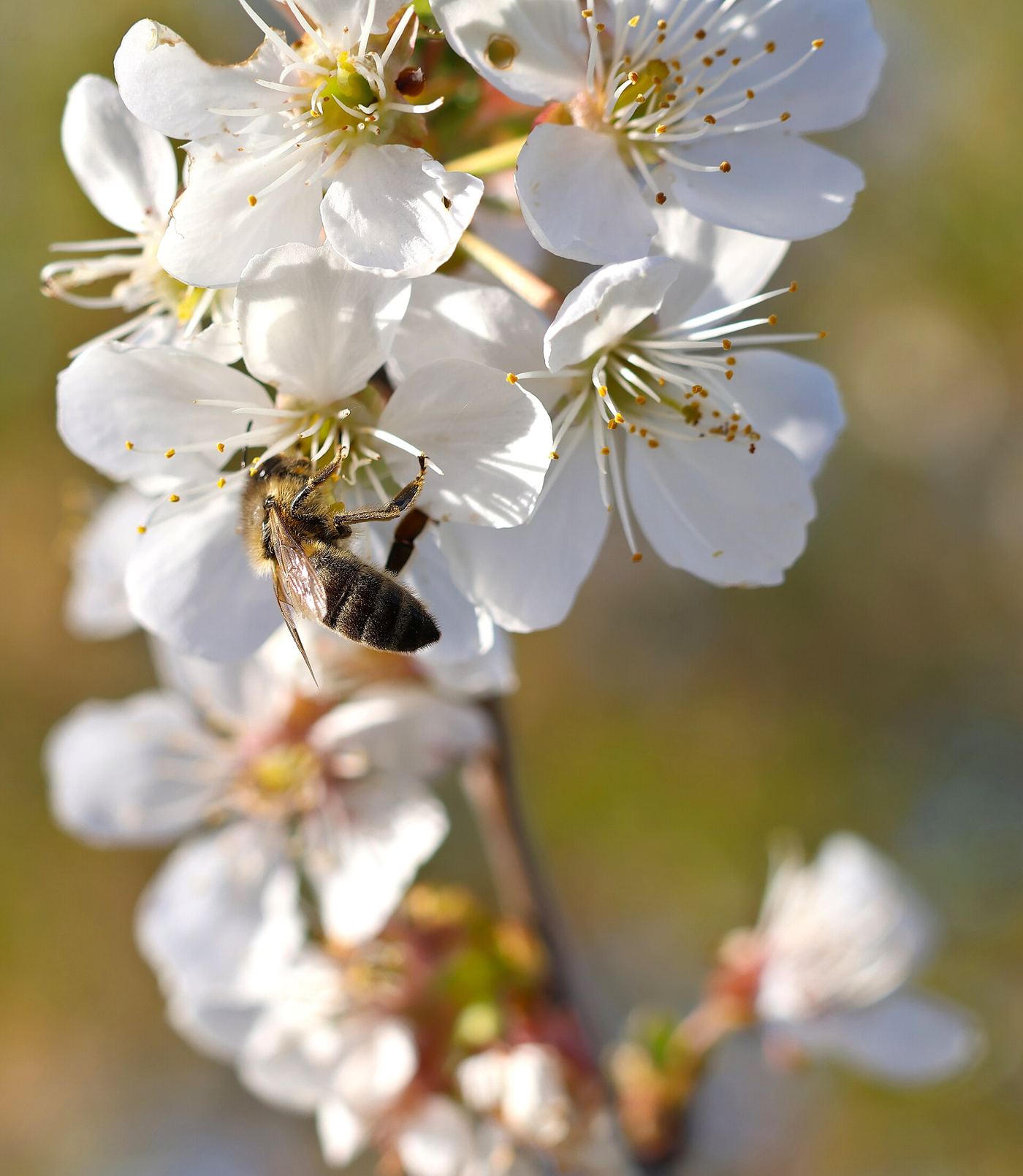

Honeybees navigate miles from their hive and return with remarkable precision by combining the position of the sun, patterns in skylight and memories of landmarks along the route. Experiments using tiny radar tags and displaced feeders show that bees keep track of both direction and distance flown, correcting for wind that pushes them sideways. Even on partly cloudy days, they can read polarised light patterns invisible to human eyes to locate the hidden sun. Back at the hive, successful foragers share what they have learned through the waggle dance, a figure-of-eight movement whose angle and duration encode where food lies. Researchers filming dances with computer vision have decoded thousands of these reports, building maps of where colonies actually forage across a season. The picture is humbling: individual bees hold detailed route memories, revisit profitable flowers at the right time of day and adjust quickly when a food source fails. Understanding this navigation matters beyond curiosity, because bees that cannot find their way home are lost to the colony, and disorientation is one suspected effect of certain pesticides and diseases.
What the Evidence Shows
New work on the honeybee navigation system is revealing how young bees build their maps before they ever forage seriously. Orientation flights, in which beginners hover facing the hive and arc outward in widening loops, appear to stitch together the landmark memories used later in life. Bees raised in featureless landscapes struggle more when displaced, suggesting that varied scenery genuinely supports better navigation. Scientists are also testing how artificial light, shifting flowering times and habitat fragmentation interfere with these finely tuned skills. The findings have practical uses in agriculture, where growers depend on managed and wild bees to pollinate crops worth enormous sums. Placing hives so that bees can use hedgerows and tree lines as guides, and ensuring forage exists throughout the season, both follow directly from navigation research. Miniature tracking technology keeps improving, with tags now light enough to follow individual bees across entire lifetimes. Each tracked journey adds detail to a picture of an insect brain, smaller than a sesame seed, solving problems that still challenge engineered drones. Protecting the landscapes bees navigate by may prove as important as protecting the bees themselves. Reporting and analysis from sources such as NASA track the same developments, and specialists following the honeybee navigation system say the direction is now consistent across independent lines of evidence.
The Wider Context
Funding bodies are watching the honeybee navigation system closely because the work sits at the junction of basic curiosity and practical return. Grant panels increasingly ask for a path from discovery to application, while researchers push back that the most valuable uses of fundamental science are rarely the ones written into the original proposal. The tension is productive when both sides stay honest about timescales.
What Happens Next
The long view on the honeybee navigation system is that fields advance by accumulation rather than by single announcements. This result adds a solid, checkable piece to a structure many teams are building, and its authors have shared their data so the piece can be tested from every side. That is how the picture eventually becomes reliable enough to act on. You can follow related developments in our coverage of science.
It is also worth remembering how quickly the picture in this area has changed before. Positions that looked settled a few years ago have been revised as new data arrived, and the same humility is appropriate now. The strongest coverage of this subject, and the most useful advice, tends to come from sources that update their views openly when the facts move, rather than defending an earlier position long after it has stopped fitting the evidence available.