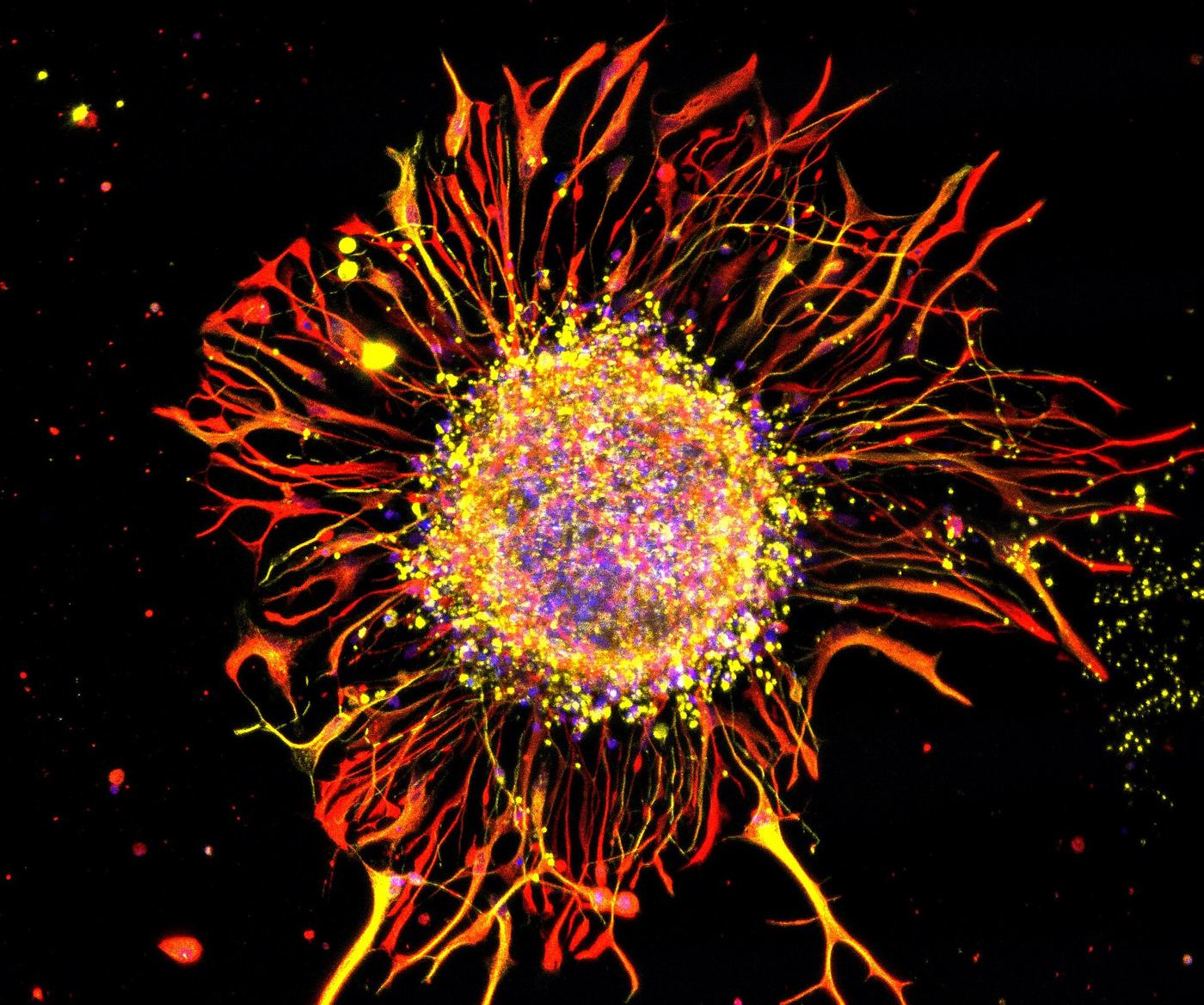

In April 2025, researchers at Kyoto University reported a new kind of treatment for Parkinson’s disease: brain cells grown in a laboratory from the patients’ own skin. Parkinson’s is caused by the death of neurons that produce dopamine, a chemical that controls movement, and patients gradually lose the ability to walk, speak and write. The Kyoto team, led by Jun Takahashi, took skin cells from seven patients, reprogrammed them into induced pluripotent stem cells, and grew them into dopamine-producing neurons. Surgeons then transplanted the cells into the patients’ brains. After two years of follow-up, the study published in Nature reported no serious side effects, the transplanted cells survived and appeared to produce dopamine, and several patients showed modest improvements in movement. It was the first trial of its kind to use a patient’s own reprogrammed cells.
What the Evidence Shows
The result is early and the numbers are small, but the approach solves a problem that has limited stem cell therapy for decades. Earlier trials used cells from donors or foetuses, which the immune system can reject, requiring drugs that suppress immunity. Using a patient’s own cells avoids rejection entirely, though it is slower and more expensive, since every patient needs their own batch of cells grown over months. Other teams are testing donor cells instead, including a trial by BlueRock Therapeutics in the United States, and the two approaches are now in a race. Parkinson’s affects more than 10 million people worldwide and has no cure, so even a treatment that slows the disease would change millions of lives. The Kyoto results suggest that replacing lost brain cells is no longer science fiction. Reporting and analysis from sources such as NASA track the same developments, and specialists following stem cell therapy for Parkinson’s say the direction is now consistent across independent lines of evidence.
The Wider Context
Funding bodies are watching stem cell therapy for Parkinson’s closely because the work sits at the junction of basic curiosity and practical return. Grant panels increasingly ask for a path from discovery to application, while researchers push back that the most valuable uses of fundamental science are rarely the ones written into the original proposal. The tension is productive when both sides stay honest about timescales.
What Happens Next
The long view on stem cell therapy for Parkinson’s is that fields advance by accumulation rather than by single announcements. This result adds a solid, checkable piece to a structure many teams are building, and its authors have shared their data so the piece can be tested from every side. That is how the picture eventually becomes reliable enough to act on. You can follow related developments in our coverage of science.
It is also worth remembering how quickly the picture in this area has changed before. Positions that looked settled a few years ago have been revised as new data arrived, and the same humility is appropriate now. The strongest coverage of this subject, and the most useful advice, tends to come from sources that update their views openly when the facts move, rather than defending an earlier position long after it has stopped fitting the evidence available.