
Saturn’s status as the solar system’s moon capital is no longer in doubt. Astronomers have secured formal recognition for 128 additional moons, lifting the planet’s confirmed total to 274 — a figure announced after years of observations with the Canada-France-Hawaii Telescope and verification work involving University of British Columbia researchers. The International Astronomical Union, which maintains the official catalogue, has accepted the new entries.
The scale of the addition is what sets this announcement apart. Moon discoveries usually arrive in single digits. A single batch of 128 reflects not a sudden change around Saturn, but a survey reaching maturity: candidates accumulated over several observing seasons finally achieving the orbital certainty that formal recognition demands.
How the confirmation process works
Recognition requires more than a detection. Each candidate must be observed repeatedly until its orbit is known well enough to find it again on demand. Survey teams stack telescope images to reveal objects far too faint for single exposures, then fit orbits to sightings spread across years. The IAU’s acceptance signals that independent scrutiny found the evidence sound.
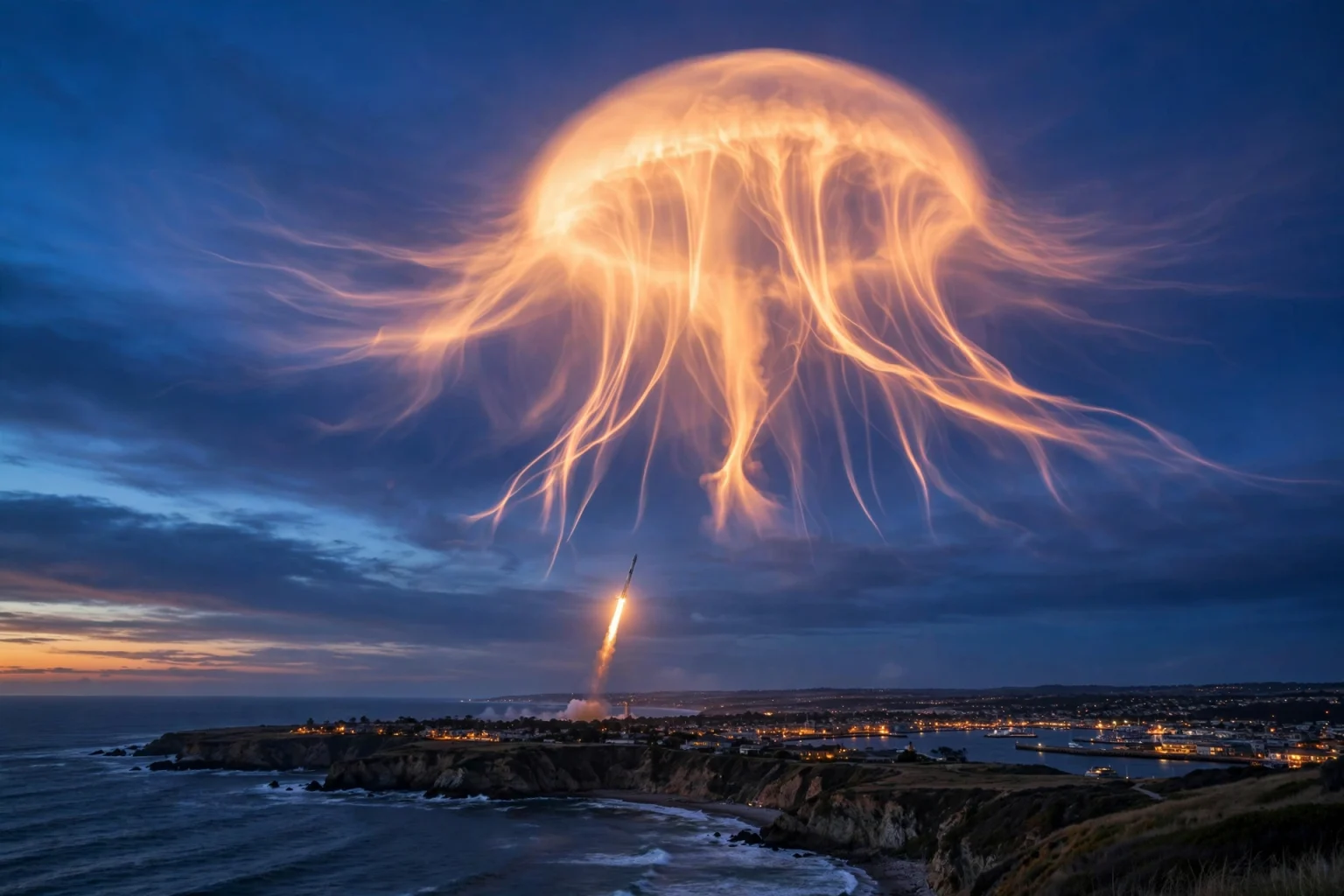
Focus readers will recognise the pattern of a technical process producing a public moment, much as in our report on the jellyfish-like cloud that followed a launch over the US East Coast, where the spectacle made sense only after the underlying physics was explained.
Irregular moons and what they record
The confirmed moons are predominantly irregular satellites: small, remote bodies on elongated, tilted orbits, many of them retrograde. Their distribution into orbital families indicates they are fragments of larger captured objects destroyed by collisions. In effect, the new census adds 128 entries to Saturn’s archaeological record, each one constraining when and how violently the planet’s surroundings were rearranged.
Details of the survey programme and its previous discoveries are published by the University of British Columbia, one of the institutions that has systematically worked through the faint moon populations of the giant planets over the past decade.
Implications beyond a record headline
First, population models must now accommodate a substantially larger captured-moon inventory, which feeds into theories of how the early solar system distributed small bodies among the giant planets. Second, mission planning benefits: any future Saturn-bound spacecraft inherits a better map of minor objects in the system. Third, the result advertises the continuing value of ground-based surveys even in an era of flagship space missions — a relatively modest telescope, used persistently, has rewritten a basic fact about the solar system.
Analysts also note the demonstration effect for archival science. Because candidates required multi-year baselines, the project shows how much discovery still sits inside accumulated observations, waiting for better algorithms and the funding to apply them.
Assessment: a settled record, an open census
Our assessment is twofold. The competitive question — which planet has the most moons — should now be considered closed for the foreseeable future; Saturn’s margin is structural, not marginal. The scientific census, by contrast, remains open. Deeper surveys will find fainter moons, and the total will rise again. What will not change is the interpretation this batch has secured: Saturn presides over the largest, most collision-marked family of moons known, and the count of 274 is the current, carefully verified measure of it.
Context for the record: the announcement also quietly resolves a secondary debate among specialists about how aggressively earlier candidate lists should have been publicised before orbits were secure. By holding candidates back until confirmation, the survey team traded early publicity for a single, defensible figure — a choice the IAU’s acceptance now vindicates. Editors and educators updating reference material can therefore adopt 274 with confidence, while noting the methodology that produced it: multi-season observations, stacked imaging, orbit fitting across years, and independent cataloguing. That chain of custody, as much as the number itself, is what distinguishes this census from the looser counts that circulated informally in recent years.
That standard of proof is what separates this census from speculation, and it is why the figure is expected to endure.