

The week’s public health figures contain a number that demands context: US measles cases grew by 8 percent in seven days, reaching 4,410 in total. Behind the percentage are local clusters, identifiable drivers and a well-established official response. This Focus report sets out what is driving the rise, which symptoms define the cases being counted and what vaccination guidance health authorities are repeating, presenting the facts cautiously and without alarmism. Measles is a serious, highly contagious disease; it is also preventable, and that combination shapes everything officials are saying this week.
Where the new cases are coming from
Investigations of the current clusters point consistently to two factors: communities with vaccination coverage below the threshold that stops transmission, and introductions linked to travel. Measles circulates widely in several parts of the world, so importations are expected; what determines their impact is the immunity of the community they land in. In well-vaccinated areas, an imported case typically infects nobody. In low-coverage pockets, the same case can seed dozens. The 8 percent weekly rise is the arithmetic of several such pockets reporting linked cases at once, amplified by active case-finding once an outbreak is recognised.
The symptoms officials are asking the public to know
Measles begins with fever, cough, runny nose and conjunctivitis, progresses in some cases to white Koplik spots inside the mouth, and then produces its characteristic rash spreading from the face downward. Infectivity starts before the rash, which is why exposure notices cover venues and flights, and why anyone suspecting measles is asked to phone ahead rather than sit in a waiting room. Complications, including pneumonia and ear infections, affect a minority but account for the hospitalisations in current reports. Our Focus coverage applies the same verify-first discipline found in stories like the early findings on a neoantigen vaccine for ovarian cancer.
Health correspondents covering this story are also watching the communication challenge it presents. Officials must convey that a disease is serious enough to act on without implying that catastrophe is imminent, a balance that the phrase officials keep using, concern without alarm, captures well. The Focus desk approach in this report mirrors that balance deliberately: the drivers are stated, the symptoms are listed plainly, the guidance is repeated accurately and speculation about next month totals is avoided, because surveillance data do not support it. Readers can help that information environment in small ways, by sharing official outbreak notices rather than screenshots of partial figures, and by treating any claim that a single week percentage proves a trend, in either direction, with scepticism. The substantive story remains the clusters themselves: where they are, whether they are growing and how quickly coverage in those communities can be restored. Those are reportable, checkable facts, and our follow up coverage will track them county by county rather than amplifying the national percentage for its own sake.
Vaccination guidance, restated without spin
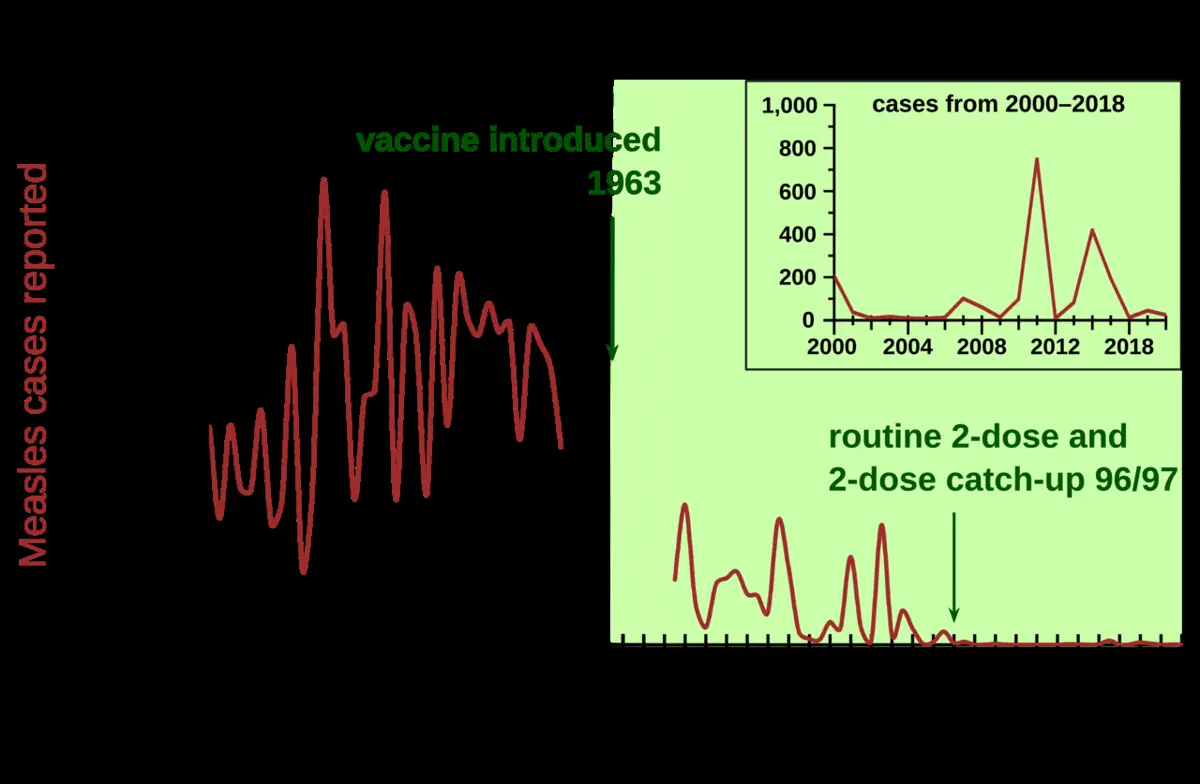
Authorities are restating, not revising, the guidance: ensure two documented doses of MMR for children and for adults without evidence of immunity, with catch-up available at any age. Two doses are approximately 97 percent effective. Special attention is directed to travellers, healthcare staff and communities named in outbreak notices. The authoritative reference, covering symptoms, exposure steps and outbreak updates, is the CDC measles pages. Officials also stress that people who were exposed may be offered vaccine or immunoglobulin within defined windows, making prompt contact with health services worthwhile even after the event.
What this week does and does not change
A total of 4,410 cases does not change daily life for most Americans, and officials have not suggested otherwise. It does sharpen the relevance of three habits in affected areas: checking vaccine records, recognising the early illness and following local exposure notices. Whether next week’s figure rises or falls will depend on how quickly current clusters are contained. What will not change is the underlying equation this week illustrates plainly: where coverage is high, measles fades; where it has slipped, the virus finds the gap, and health departments must do, case by case, the work that vaccination does in advance.